
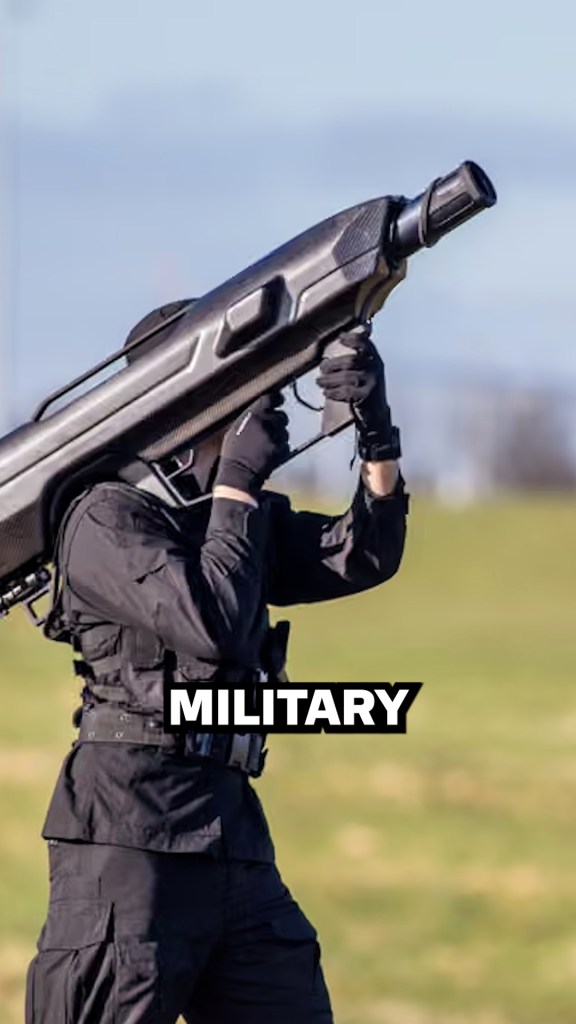
This is a cheap Iranian drone called shahed. It costs about $20,000 to make. And this is a state of the art F-35, which costs about $100 million, a staggering 5000 times more than the drone. And this is an Aim-120 Amram missile, the F-35 used to take down the $20,000 drone. The missile costs about $100,000. The drone out produces f 35 by a factor of 5,000 to 1.
In military terms, this is called asymmetric strategy. The famous Iranian doctrine of saturating the air defenses of the U.S. Navy. If iran makes a million of these drones and launches them simultaneously at a carrier group, the carrier group will easily be able to take them down at a cost way bigger than it took Iran to launch the attack.
Asymmetric strategies require asymmetric means to counter them enter the net nets are an even cheaper way to counter drones. And almost every major military in the world now is deploying anti-drone nets. Now asymmetric strategies not only exist in the military theater, they exist in the real world, as well, Facebook was an asymmetric product for high school students to find dates.
Uber was an asymmetric product to make vehicle owners think they’re actually improving their lives by getting paid to drive people around town instead of focusing on their main work. Tesla is an asymmetric business that takes advantage of the electric grid to power cars. Every country needs asymmetric assessment, not only at the military level, which is the most important level, but on economic and ideological level as well.
Every company needs an asymmetric assessment, not just at the product market fit level, but at the operational level, PR level and asset management and culture level. Every professional needs an asymmetric assessment, not just at the competence level, but at the networking level and presentability level. To learn more, read Chapter 62 of the 100 Islamic Principles for Life. All War Is Deception.
 Islamic Principles Website